
Chatten Sie mit Ava - Ihrem AI Business Consultant

Hallo, ich bin Ava, Ihr KI-Leitfaden für den Erfolg Ihres Unternehmens!
Ganz gleich, ob Sie bereits ein Unternehmen führen oder davon träumen, eines zu gründen - ich helfe Ihnen dabei, Ihre Vision mithilfe von KI-gestützten Freelancern in die Realität umzusetzen. Teilen Sie uns Ihre Geschäftsziele mit, und gemeinsam erstellen wir ein Projekt, auf das unsere talentierten Freelancer ein Angebot abgeben können. Lassen Sie uns Ihre Vision in die Realität umsetzen!
Ich habe ein Geschäft
Ich gründe ein Unternehmen
Beim Senden der Konversation an Ihre E-Mail ist ein Fehler aufgetreten. Bitte versuchen Sie es später noch einmal.
Sie können Ihr Gespräch nur einmal pro Stunde speichern. Bitte versuchen Sie es später noch einmal.
Ihr Gespräch ist zu kurz. Chatten Sie weiter mit Ava, um das Speichern zu ermöglichen.
How COVID-19 will change consumer behavior forever
The Coronavirus is rapidly changing the behaviours of consumers. In this post we share key insights and suggest more effective marketing strategies.
15.04.2020 • 7 Min. Lesezeit
Aktualisiert am 17.04.2020 von Closed User
E
Closed User
Das Kopieren in der Zwischenablage ist fehlergeschlagen, bitte nach Anpassung Ihrer Berechtigungen erneut versuchen.
In der Zwischenablage kopiert.

How should your business respond to the new consumer mindset?
As businesses fight to salvage their dwindling customer base, how is consumerism being moulded beneath the heavy footstep of the Coronavirus? In this post we examine how Covid-19 is likely to disrupt consumer behavior and how businesses should respond.
Consumers are preferencing online shopping
In isolation the internet is our only gateway to the outside world, and often, our only means of purchasing essential goods. Let's take a look at how global ecommerce trends are being affected by the coronavirus.
U.S ecommerce sales increased by about 25% in response to Covid-19 effects.
Brazi, one of the fastest growing global ecommerce markets worldwide, saw an increase in ecommerce sales of 40% within just the first 2 weeks of March.

As former pragmatic consumers are forced to embrace the online shopping model, this trend will continue to rise even post Covid-19. When consumers are finally given the freedom to shop at all stores they're unlikely to completely discontinue their new ecommerce shopping habits as they struggle to conform to what will ironically become a foriegn shopping experience.
So if your business isn't currently servicing customers online, you are way behind a rapidly rolling 8 ball.
Old fashioned business models primarily reliant on face-to-face transactions need to integrate a strong ecommerce solution fast lest they too get added to the growing list of bankrupt businesses .
But simply appending an ecommerce option to your website is not enough, many businesses are still failing despite having an ecommerce safety net. That's why not all consumers have switched to an ecommerce shopping model during the Coronavirus pandemic.

Why is that?
Two reasons - delivery delays and stock availability.
By physically going to a store, consumers can take their purchases home on the same day and they have a higher chance of getting their hands on stock.
The Coronavirus has prioritized these variables in the minds of consumers. Panic buying episodes demonstrated the precedence of feeling a sense of control over every other requirement. So if you want to have a competitive chance in the new virtual shopping world, give your customers everything they want, fast!
This is a very achievable target. Reshoring your supply chain, integrating real time order tracking solutions and optimizing your ecommerce site for quick conversions should do the trick.
Consumers are frightened
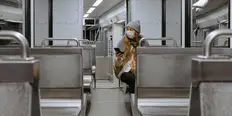
From the relentless Covid-19 news flooding all social feeds to the apocalyptic style tapering of public transportation seating to encourage social distancing, consumers are unable to escape the anxieties of the Coronavirus .
Businesses can help resolve this by donating a percentage of their profits for the greater good. Focusing on good deeds distracts consumers from their fears and they will reciprocate your kindness with increased conversions since consumers are more likely to buy from businesses that help those that are struggling .
While such strategies may instantly quell consumer anxieties while they're in isolation, brick and mortar businesses will need to work even harder if they want to convince consumers to overcome their fears of returning to public shopping locations.
The future of brick and mortar shopping
The handshake and high five have almost instantly been removed from acceptable social etiquette, and with them, any other non essential contact activities. When this isolation season is finally over, If brick and mortar stores retain their historical model liberal public contact, returning customers will feel overwhelmed and leave.
Brick and mortar businesses need to adjust their environments to mitigate the presupposed fears of returning consumers. Increasing the amount of open space in the store will encourage customers to enter without the anxiety of standing too close to others. Of course, this could mean less space for sales stock, but as consumers assimilate back into this historical social norm, floor stock can be gradually returned.
An increased number of low touch surfaces is another important consumer requirement. 87% of U.S shoppers now prefer a self-checkout option. Shopping centers have paved the way to this new expectation amid the Covid-19 crisis by encouraging customers to use the self self checkouts to protect their staff.
Though this is more work on the consumer's behalf it's actually less stressful because there's less interhuman interaction and therefore lower chances of passing on infection.
The future of brick and mortar shopping could see a significant capitalization on the low touch shopping experience with the implementation of robotic sales staff .
The subject of low touch service is one of great debate amongst retail businesses, due to the conception that adopting a low touch model means sacrificing customer service. But in the aftermath of the Coronavirus, what does good customer service actually mean?
The definition has changed. Consumers now first expect businesses to prioritise the health of the public followed by the availability of stock, that's great customer service. So increasing self-serve checkout options and decreasing the amount of retail staff will align your business with the shifting definition of customer service, with the added benefit of lowering your overheads.
To supplement less staff on the floor, retailers could implement a voice technology service solution which would allow customers to vocalize all of their queries into an ipad like device.
These devices could direct customers to the location of an item in question and even autonomously place delivery orders thereby seamlessly integrating an ecommerce funnel into a brick and mortar store, maximizing revenue with less physical stock on site.
But with so many retail stores closing down even before the Coronavirus, is the brick and mortar business model even worth the effort anymore?
Let's take a look at the numbers,
In the last quarter of 2019, only 11.4% of retail sales in the U.S resulted from ecommerce purchases, the remaining 88.6% originated from brick and mortar stores.

So the brick and mortar business model is not dead, customers still enjoy the immersive shopping experience. If brick and mortar retailers make an effort to quell the fears of the new consumer in a foreign public shopping environment, their sales numbers will continue to rise.
Consumers are craving entertainment
Staying cooped up indoors has a funny way of starving people for entertainment. To satisfy the groanings of the public, Disney has sped up the release of Frozen 2 and Star Wars: Rise of Skywalker and even Netflix finally recovered its dwindling viewership as it experienced its greatest spike in traffic ever .
Because the public is so desperate for entertainment, they're now more appreciative of businesses that make an effort to entertain them through their marketing rather than those that just spit out the same old generic salesy social posts.
This means that businesses should start prioritizing user engagement in all of their marketing campaigns over sales. This might seem like a risky change of mindset but it's necessary to break down the raised boundaries of the new, more conservative, consumer.
With their thirst for entertainment quenched, and, as a result, their apprehensions lowered, consumers become a lot more receptive to a business offering.
Here is a great example of the social enterprise Who Gives a Crap utilizing this entertainment strategy in a recent email campaign.
The company sent out a communication to update customers on their stock replenishment efforts. This simple, yet entertaining, crossword was included in their email:

Entertaining consumers doesn't have to be as complicated as a custom developed gamification solution (as cool as that idea is), it could be as simple as a crossword puzzle or a 'can you find the hidden item in this picture' social post, those seem to be growing in popularity lately.

This almost insatiable yearning for entertainment could even result in an incredible spike in retail sales as consumers finally burst free from their homes and into the loving sanitized arms of brick and mortar stores.
This phenomena, also known as revenge shopping , could help retailers quickly recover the losses they incurred during Covid-19 as consumers binge shop to satisfy their withdrawal symptoms.
The luxury brand Hermès, made $2.7 million in a single day in China when customers finally broke free from their homes. This almost inconceivable explosion of retail activity could be a projection of what the western world is to expect when its isolation period comes to an end.
To maximize the chances of such a profitable return to BAU, businesses should start cultivating a strong relationship with consumers via regular email communications . If these communications contain the aforementioned entertainment options, as well as a window to the tantalising sales that will celebrate the reopening of your store, email engagement metrics will remain nice and plump until consumers finally receive the highly anticipated email announcing your store's reopening date.
Consumers are likely to retain their flamboyant entertainment requirements post Covid-19 as it will be difficult to universally lower the baseline from such a dopamine inducing high.
Consumers have a higher respect for small businesses
As the Coronavirus continues to decimate small businesses globally, consumers are beginning to sympathise with small enterprises struggling to earn a living. Large corporations have publicized their efforts to support small businesses which is further encouraging consumers to follow suit.
This means two things:
1. Small businesses need to double down on their marketing efforts to keep reminding local consumers of their presence and readiness to service customers.
2. When the isolation period is over, consumers are likely to prioritize small businesses to help them rebuild in the aftermath.
Small businesses need to start thinking about how they can best service this new breed of health conscious consumers returning to their stores. Increased sanitation stations and more available space between clientele is a start, but consumers are looking for more than that, they want to strengthen their immune systems against such future events. By also partnering with local fitness and nutrition industries, small businesses can offer their clients discounts on these services which will satisfy the two primary desires of the new consumer, investing in future health and supporting local businesses.
This is also a fantastic opportunity to launch a startup since consumers are now, more than ever, likely to support smaller businesses before large corporations.
Final thoughts
The Coronavirus is changing consumerism. If businesses do not adjust their strategies in line with these changes, there is little hope of them surviving the new economic landscape shaped by the passing of the Coronavirus.
Sagen Sie uns, was erledigt werden soll
Projektnamen eingeben
Ähnliche Storys



Sprechen Sie mit einem unserer technischen Co-Piloten, der Sie bei Ihrem Projekt unterstützt
Für Sie empfohlene Artikel
In this post we highlight the top consumer trends amidst the Coronavirus so that you can market your business effectively in this economic climate.
10 min read

Is your business prepared to weather this profound period of change? Learn how to succeed while working from home.
12 min read

A million dollar business idea is useless if it remains written on a napkin. Learn the best ways of securing funding to build your dream.
26 min read

Freelancer sent a Global Coronavirus (nCov-19) Survey to 40 million users on what governments are doing — and should be doing — to stop Coronavirus.
14 min read
Danke! Wir haben Ihnen per E-Mail einen Link geschickt, über den Sie Ihr kostenloses Guthaben anfordern können.
Beim Senden Ihrer E-Mail ist ein Fehler aufgetreten. Bitte versuchen Sie es erneut.



Das Kopieren in der Zwischenablage ist fehlergeschlagen, bitte nach Anpassung Ihrer Berechtigungen erneut versuchen.
In der Zwischenablage kopiert.
Vorschau wird geladen
Erlaubnis zur Geolokalisierung erteilt.
Ihre Anmeldesitzung ist abgelaufen und Sie wurden abgemeldet. Bitte melden Sie sich erneut an.